Bukhara
🚄
Getting there: Afrosiyob high-speed train from Samarkand (~1.5 hr) or Tashkent (~3.5 hr)
📅
Best time: Apr – May & Sep – Oct — mild and clear; summers are brutally hot, winters cold
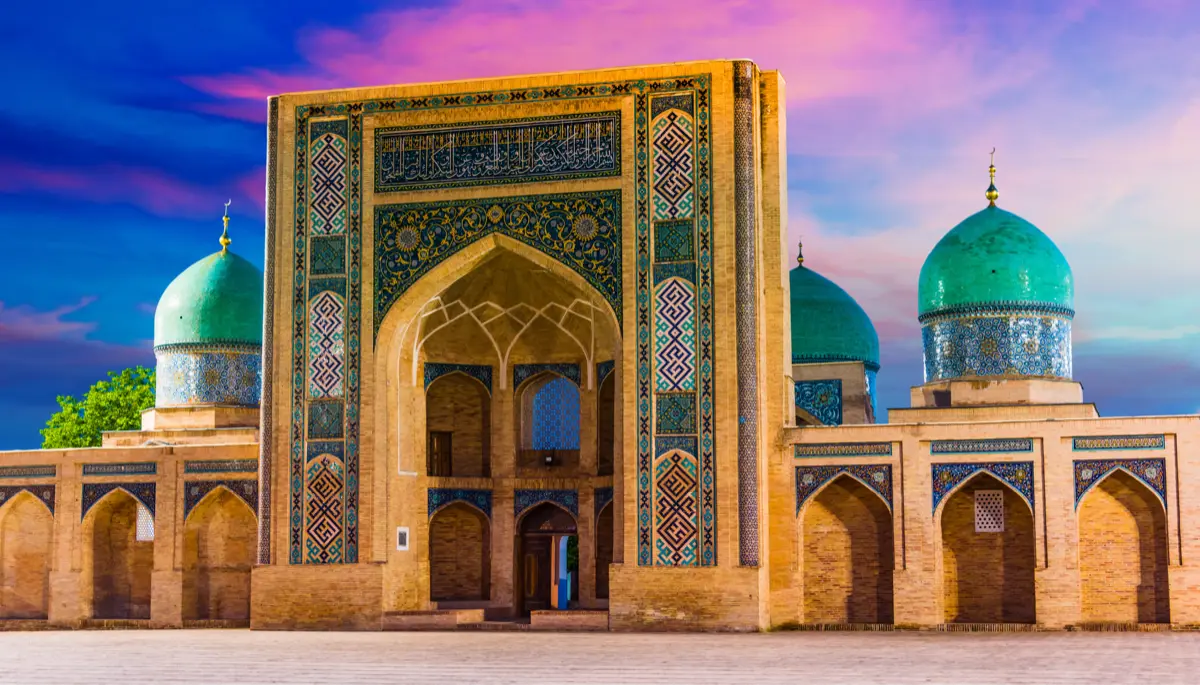
The most complete medieval city in Central Asia — a living old town of madrasas, minarets and
trading domes you can wander entirely on foot. Far more relaxed than Samarkand, with
atmospheric courtyard guesthouses and a slow pace that makes it many travellers' favourite
stop. Easy to settle into for several days.
Khiva
🚆
Getting there: Overnight train or ~6 hr drive from Bukhara to Urgench, then a short taxi to Khiva
📅
Best time: Apr – May & Sep – Oct — desert climate; avoid the peak summer heat
A perfectly preserved walled inner city (the Ichan Kala) that feels like an open-air museum —
compact enough to see in a day, but magical to stay inside overnight once the day-trippers
leave. The most remote of the Silk Road trio, and well worth the longer journey out west.
The Fergana Valley
🚐
Getting there: Shared taxi or bus from Tashkent over the Kamchik Pass (~4–5 hr) to Fergana, Margilan or Andijan
📅
Best time: Apr – Jun & Sep – Oct — pleasant in the orchards and bazaars
The lush, densely populated heartland of traditional craft — Margilan for centuries-old silk
weaving, Rishtan for its famous blue ceramics, and bustling bazaars throughout. Off the
standard tourist trail, it offers the most authentic glimpse of everyday Uzbek life.
Nukus & the Aral Sea
✈️
Getting there: Flight or train to Nukus, then a guided 4x4 tour out to Moynaq and the dried seabed
📅
Best time: Apr – May & Sep – Oct — the desert is punishing in summer
The remote far west, home to the surprising Savitsky Museum and its world-class collection of
banned Soviet avant-garde art. From here you can reach Moynaq, the ghostly ship graveyard
left behind by the vanished Aral Sea — one of the most sobering and unforgettable sights in
the country.